Carbonxt Group (CG1:AU) has announced CG1 non-renounceable pro-rata entitlement offer
Download the PDF here.
This post appeared first on investingnews.com


Carbonxt Group (CG1:AU) has announced CG1 non-renounceable pro-rata entitlement offer
Download the PDF here.

The latest addition to the pool of Democrats seeking to challenge Sen. Susan Collins, R-Maine, is doubling down on Zohran Mamdani-style socialism, says the chief of Maine’s Republican Party.
Democrat Graham Platner launched his campaign highlighting his history as an Army and Marine veteran as well as an oyster farmer, but state GOP chief Jason Savage told Fox News Digital that rural accolades aren’t policy positions. He pointed to Platner’s hiring of a top Mamdani adviser, Morris Katz, to produce his campaign launch video.
In that video, Platner rails against the ‘oligarchy’ and endorses universal healthcare. His website features messaging that claims the U.S. has a ‘billionaire economy,’ and that – if elected – Platner would view it as a key part of his job ‘to dismantle’ it.
‘Graham Platner is Maine’s Mamdani,’ Savage told Fox News Digital in an interview. ‘He brought in the Mamdani team to support his campaign. He’s out doing a lot of work with socialist groups.… He’s a Bernie bro.’
‘What we’re seeing here is the exporting of the Mamdani ideology to the state of Maine because they think that they can gain ground in a small state where things aren’t as expensive,’ he added.
‘You can look through Graham Platner’s donor history, and you can see that he donated to Harris for President, Bernie Sanders, Ilhan Omar,’ he continued, arguing that far-left candidates are a major threat to the Democratic Party.
Platner’s campaign did not immediately respond to a request for comment from Fox News Digital.
‘If common-sense Democrats, and then the leadership like [Sen.] Chuck Schumer don’t do something and say that isn’t the future of our party, then they’re gonna run in a bunch of these races. and we’re gonna beat them,’ he said.
Savage argued that the Democratic Party’s embracing of the far-left is a ‘double-edged sword.’ He said Democratic candidates can’t succeed without the ‘extreme wing’ of the party, and now ‘they’ve created a monster that they don’t have the ability to control.’
‘In the long run, it’s going to be catastrophic for them. I mean, Graham Platner advocates for allowing men to be in girls’ and women’s sports,’ Savage said. ‘He advocates for all sorts of policies that are very, very unpopular, and the Democrats can’t say anything to stop that.’
The Democratic challenger list against Collins is growing, and reports say those already in office are trying to tap Janet Mills, the state’s 77-year-old Democratic governor, for the seat.
Republicans currently control the majority of the Senate by a 53-47 margin. Democrats would need to flip four seats in the 2026 midterm elections to take the majority.
A spokesperson for Collins told Fox News Digital that Platner is ‘just another progressive entering the race.’
Fox News’ Pilar Arias contributed to this report
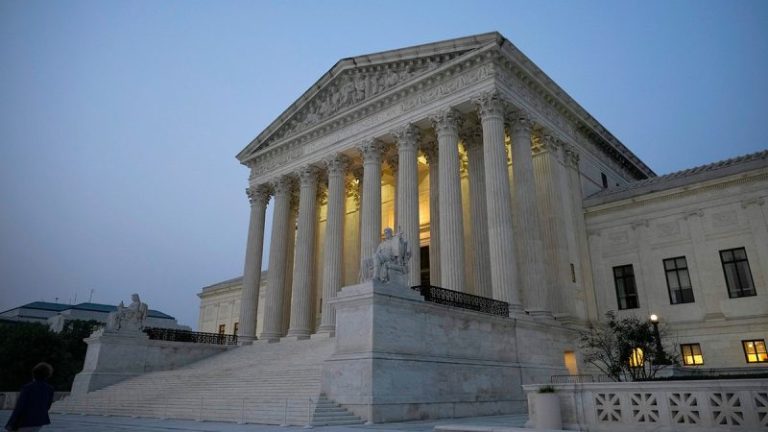
The Trump administration scored a major victory in the Supreme Court Thursday as the justices, in a 5-4 order, cleared his administration to slash more than $783 million in National Institutes of Health (NIH) research grants tied to diversity, equity and inclusion initiatives, LGBTQ issues and other hot-button topics.
The unsigned majority order said NIH ‘may proceed with terminating existing grants’ while leaving in place a partial block on issuing new directives.
The move delivers a political win for Trump’s broader push to roll back DEI programs across the federal government.
The decision overturns rulings by lower courts that had blocked the cuts. In June, U.S. District Judge Angel Kelley of Massachusetts called the administration’s actions ‘arbitrary and capricious’ and said NIH had ‘failed to provide a reasoned explanation’ for cutting grants midstream. The 1st Circuit upheld her injunction in July, setting up Trump’s emergency appeal to the Supreme Court.
The Justice Department argued in its July 24 filing that leaving the injunction in place ‘forces NIH to continue funding projects inconsistent with agency priorities’ and warned the order ‘intrudes on NIH’s core discretion to decide how best to allocate limited research funds.’
Opponents framed the cuts as ideological. The American Public Health Association warned that ‘halting these grants would devastate biomedical research across the country, disrupting clinical trials and delaying urgently needed discoveries’ and said ‘the administration has offered no scientific basis for these cancellations — only ideology.’
A coalition of Democrat-led states led by Massachusetts argued that ‘patients should not be collateral damage in a political fight.’
News outlets stressed the stakes of Thursday’s decision.
The Associated Press described the ruling as the court letting Trump cut $783 million in research funding ‘in an anti-DEI push.’
Reuters reported that ‘the Supreme Court in a 5–4 order cleared the way for the Trump administration to cut diversity-related NIH grants, though it left in place part of the ruling blocking new restrictions.’
Research groups warned of the cuts’ fallout. The Association of American Universities said the cuts ‘risk chilling scientific inquiry by discouraging researchers from pursuing politically sensitive topics.’
Scientists cautioned the decision could derail progress on diseases such as cancer and Alzheimer’s, even as the broader legal fight continues in the 1st Circuit and may return to the Supreme Court.
The Associated Press contributed to this report.

Ukrainian President Volodymyr Zelenskyy said he wants a ‘strong reaction’ from the U.S. government if Russian President Vladimir Putin does not sit down with him for a bilateral meeting.
This comes as U.S. President Donald Trump is seeking to broker a peace agreement between the two countries that have been at war since Moscow’s February 2022 invasion of Ukraine, although Trump has conceded that Putin may not be prepared to make a deal.
Zelenskyy has said he has already agreed to a proposed meeting with Putin.
‘I responded immediately to the proposal for a bilateral meeting: we are ready. But what if the Russians are not ready?’ Zelenskiy said at a news briefing in Kyiv on Wednesday.
‘If the Russians are not ready, we would like to see a strong reaction from the United States,’ he added.
Trump separately met with both leaders in the past week, with Zelenskyy visiting the White House along with other European leaders earlier this week and the U.S. president meeting Putin in Alaska last week.
The White House has said Putin was willing to meet with his Ukrainian foe after a phone call this week with Trump.
‘President Trump spoke with President Putin by phone, and he agreed to begin the next phase of the peace process, a meeting between President Putin and President Zelenskyy, which would be followed, if necessary, by a trilateral meeting between President Putin, President Zelensky and President Trump,’ White House press secretary Karoline Leavitt told reporters on Tuesday.
The path toward peace between the two sides remains uncertain despite U.S. efforts for diplomacy, as the U.S. government and its allies attempt to work out potential security guarantees for Ukraine.
Zelenskyy said it was unclear what concessions about territory Russia was willing to make to end the conflict. Trump has previously said Kyiv and Moscow would both need to cede territory.
‘To discuss what Ukraine is willing to do, let’s first hear what Russia is willing to do,’ Zelenskyy said. ‘We do not know that.’
Reuters contributed to this report.

The Pentagon has created a new medal for service members who’ve deployed to the southern border to assist federal law enforcement with President Donald Trump’s crackdown on illegal immigration.
The Pentagon unveiled plans for a Mexican Border Defense Medal for U.S. troops serving with Joint Task Force Southern Border, according to a new memo the Pentagon released Aug.13 that was shared on social media.
A U.S. defense official confirmed the authenticity of the memo to Fox News Digital Wednesday.
Now, service members will receive the Mexican Border Defense Medal (MBDM) instead of the Armed Forces Service Medal (AFSM) like they previously earned for supporting Customs and Border Protection at the border, the memo said.
The Armed Forces Service Medal, originally created in 1996 by former President Bill Clinton, is awarded to troops who have participated in a military operation with ‘significant activity,’ but didn’t encounter foreign armed opposition or imminent hostile action, according to a U.S. Army description of the medal.
The Pentagon said in July that approximately 8,500 military personnel are assigned to Joint Task Force Southern Border, and have been tasked with responding to security threats there. The task force got underway in March and completed approximately 3,500 patrols between then and July, according to the Pentagon.
Those eligible for the award must have deployed since Jan. 20 to support Customs and Border Protection, and served within 100-nautical miles from the international border shared with Mexico in either Texas, New Mexico, Arizona or California.
Those who’ve also served in adjacent waters up to 24 nautical miles away from the border also are eligible.
‘Service members must have been permanently assigned, attached, or detailed to a unit that deployed to participate in a designated DoD military operation supporting CBP within the (area of eligibility) during the (period of award) for 30 consecutive or nonconsecutive days,’ the memo said.
Those who already have received the Armed Forces Service Medal for service at the southern border may appeal to receive the new award but are ineligible to receive both, according to the Pentagon.
‘Service members and Veterans previously awarded the AFSM for DoD support to CBP may apply to their respective Military Service for award of the MBDM in lieu of the AFSM previously awarded to recognize such service; however, no Service member or Veteran may be awarded both the AFSM and the MBDM for the same period of qualifying service,’ the memo said.
The Pentagon, per the direction of the president, has established four national defense areas along the border, bolstering U.S. troops’ capacity to assist Customs and Border Protection under the task force.
The national defense areas operate under military jurisdiction, paving the way for U.S. troops to detain trespassers. Without placing these stretches of land under military jurisdiction, U.S. troops were barred from doing so under existing federal law.
‘Through these enhanced authorities, U.S. Northern Command will ensure those who illegally trespass in the New Mexico National Defense Area are handed over to Customs and Border Protection or our other law enforcement partners,’ Air Force Gen. Gregory Guillot, commander of U.S. Northern Command, said in an April statement. ‘Joint Task Force Southern Border will conduct enhanced detection and monitoring, which will include vehicle and foot patrols, rotary wing and fixed surveillance site operations.’

A judge on Thursday found that Alina Habba was unlawfully serving in the role of acting U.S. attorney of New Jersey after President Donald Trump sidestepped typical processes to keep her in charge.
Judge Matthew Brann said Habba has not been the rightful temporary U.S. attorney for New Jersey since July 1, a ruling that follows two criminal defendants in New Jersey challenging her appointment in court, alleging it was unconstitutional.
‘Faced with the question of whether Ms. Habba is lawfully performing the functions and duties of the office of the United States Attorney for the District of New Jersey, I conclude that she is not,’ Brann wrote in a 77-page order.
Habba, Trump’s former personal defense lawyer, had been serving as interim U.S. attorney, but when her term expired last month, Trump and Attorney General Pam Bondi used loopholes in federal vacancy laws to install her as ‘acting’ rather than ‘interim’ U.S. attorney.
One of the defendants in the district, Julien Giraud, alleged that the moves violated his constitutional rights because of the string of unconventional actions it took to attempt to keep Habba in the role.
Brann, an Obama appointee serving in the Middle District of Pennsylvania, agreed and found Habba could not prosecute Giraud or another defendant who challenged Habba’s position.
Brann is presiding over the matter after the chief judge of the Third Circuit Court of Appeals, which covers New Jersey and Pennsylvania, decided the case presented too much of a conflict for New Jersey’s federal judges.
The New Jersey judges made the rare decision to decline to extend Habba’s term and instead appointed career attorney Desiree Grace to the job. Trump and Bondi fired Grace, withdrew Habba’s nomination as permanent U.S. attorney and then reinstated Habba as acting U.S. attorney, which they said kept Habba in charge for at least another 210 days under federal statute.
Fox News Digital reached out to a spokeswoman for Habba for comment.
This is a developing story. Check back for updates.

Best Buy is launching a third-party marketplace, as it tries to bulk up the variety of merchandise it offers and reverse slower sales.
Starting on Tuesday, shoppers who go to Best Buy’s website and app will see products and brands that weren’t available there before, including more tech-related accessories like custom video game controllers and some nontech items including seasonal decor and sports collectibles.
The company’s online marketplace riffs off those of other retailers, such as Amazon and Walmart, by relying on third-party sellers to stock, sell and ship inventory and taking a cut of their sales in the form of a commission.
“Everything we do is really centered around the customer and their technology needs, and we do see customers actually doing a lot of consumer electronics transactions through marketplaces,” Chief Customer, Product and Fulfillment Officer Jason Bonfig said. “And as a result of that, we need to make adjustments to be where the customer’s at.”
He said Best Buy noticed gaps in its assortment that the new platform will help it fill. For instance, Bonfig said the company didn’t carry batteries for some older cameras or cases for older smartphones. And it didn’t offer some items that complement Best Buy purchases, such as furniture that goes around a big-screen TV or cookware to use with a new kitchen appliance.
Along with adding those items, the marketplace makes it possible for smaller vendors with innovative products to sell on Best Buy’s website when they’re not yet big enough to make or distribute the volume needed for its stores, he added.
Best Buy’s marketplace launches at a time when its business could use a boost. Its annual sales have declined over the past three years as the company contends with a sluggish housing market, selective consumer spending and a decline in device replacements after a spike in tech purchases during the Covid pandemic.
The company cut its sales outlook in May and said it expects full-year revenue to range from $41.1 billion to $41.9 billion. That would be similar to Best Buy’s annual revenue of $41.5 billion in the most recent fiscal year, but below the numbers it posted in the years leading up to and during the pandemic.
Best Buy will share its most recent earnings results and sales forecast on Aug. 28.
Tariffs have complicated the backdrop for Best Buy, too, since the higher duties have added costs for consumer electronics vendors and distracted them from other priorities like research and development that leads to new and innovative products, said Jonathan Matuszewski, a retail analyst at Jefferies. He said Best Buy tends to win sales instead of big-box or online competitors when there’s a leap forward in technology.
With the platform’s launch, Best Buy joins other retailers that have jumped on the trend of introducing or expanding third-party marketplaces. Lowe’s and Nordstrom started marketplaces last year. Ulta Beauty plans to launch its own later this year. And Target said it will expand its existing marketplace, Target Plus.
On Best Buy’s earnings call in May, CEO Corie Barry described the third-party marketplace as one of the company’s strategic priorities for the year. She said that new profit stream “is even more important in this environment” and will provide greater flexibility with the range of items and price points.
Plus, she said the marketplace supports the company’s growing advertising business. Sellers can buy ads for their products, including by paying for better placement in search results.
Marketplaces and the advertising opportunities that come with them tend drive higher profits for retailers, said Justin MacFarlane, a managing director for the global retail group of AlixPartners. Sellers buy, stock and ship products instead of the retailer, and take on both the expense of buying inventory and the risk that they may have to mark down unwanted items, he said.
Yet the business model comes with risks, too, he said. For instance, sellers may not have the same standards as a retailer and it could anger a retailer’s customers if they send products in torn boxes, with missing pieces or days later than expected. And he said retailers can flood their websites with so many different categories, brands and products that they overwhelm customers with choices that seem irrelevant to their company’s identity.
“You get addicted to the growth and more is more until it’s not,” he said.
At launch, Best Buy’s marketplace will have about 500 sellers, Bonfig said. He said the company vetted applicants and whittled them down to the ones who can provide a high-quality customer experience. The sellers must match Best Buy’s return policy, he added.
Customers can return purchases either directly to the seller or to Best Buy stores, he said.

A ticket-reselling operation used a network of fake accounts to bypass Ticketmaster’s security protocols to grab hundreds of thousands of tickets to hugely popular tours for artists like Taylor Swift and Bruce Springsteen and then re-sold them for millions, federal regulators said Monday.
The Federal Trade Commission alleges the operation used illicit software that masked IP addresses, as well as repurposed credit cards and SIM phone cards, as part of the scheme. It was run through various guises, like TotalTickets.com, TotallyTix and Front Rose Tix, but was run by three key individuals, the agency said.
In total, the group is accused of buying 321,286 tickets to 3,261 live performances from June 2022 to December 2023, in bunches of 15 or more tickets to each event at a total cost of approximately $46.7 million and then reselling them for $52.4 million, netting approximately $5.7 million.
That includes $1.2 million from reselling tickets in 2023 for Taylor Swift’s record-breaking “The Eras Tour.” In one instance, the suspects used 49 different accounts to purchase 273 tickets for Swift’s March 2023 tour stop in Las Vegas, vastly exceeding Ticketmaster’s six-ticket limit, which they then sold for $120,000, the FTC alleges.
Another part of the alleged scheme involved using friends, family and paid strangers to open Ticketmaster accounts. The FTC says the defendants at one point printed up flyers in places like Baltimore claiming that participants could “make money doing verified van sign ups” in just “3 easy steps,” earning $5 for the account creation and $5 to $20 each time they received a Verified Fan presale code.
Ticketmaster came in for heavy criticism after fans complained of faulty technology and eye-watering prices for 2022 sales for Taylor Swift and Bruce Springsteen’s tours. The Verified Fan pre-sale for Swift’s tour crashed its site, which it blamed on “bot attacks” and bot fans who didn’t have invite codes. It was subsequently forced to postpone the sale date for the general public seeking tickets to Swift’s tour “due to demands on ticketing systems and insufficient remaining ticket inventory.”
In response, Swift alluded to broken “trust” with Ticketmaster, though she didn’t name it directly.
“It’s really difficult for me to trust an outside entity with these relationships and loyalties, and excruciating for me to just watch mistakes happen with no recourse,” she wrote in an Instagram message in 2022, adding: “I’m not going to make excuses for anyone because we asked them multiple times if they could handle this kind of demand and we were assured they could.”
Springsteen said in a statement at the time that “ticket buying has gotten very confusing, not just for the fans, but for the artists also” but that most of his tickets are “totally affordable.”
In March, President Donald Trump signed an executive order focused on curbing exploitative ticket reselling practices that raise costs for fans.
On Monday, FTC Chairman Andrew N. Ferguson said Trump’s order made clear ‘that unscrupulous middlemen who harm fans and jack up prices through anticompetitive methods will hear from us.”
“Today’s action puts brokers on notice that the Trump-Vance FTC will police operations that unlawfully circumvent ticket sellers’ purchase limits, ensuring that consumers have an opportunity to buy tickets at fair prices,” he said in a statement.
Ticketmaster itself has remained under federal scrutiny for violating a prior agreement to curb what regulators said was anti-competitive behavior. In 2024, the Justice Department and FTC under President Joe Biden opened a lawsuit against Ticketmaster’s parent company, LiveNation, that accused it of monopolizing the live events industry.
It was not immediately clear whether that suit is still active. In July, the parent company of the alleged operation charged Monday by the FTC, Key Investment Group, sued the agency to block its pending investigation into its sales practices, saying that ticket purchases on its site did not use automated software, or bots, and did not violate the 2016 Better Online Ticket Sales (BOTS) Act.
Representatives for the FTC and Justice Department did not respond to a request for comment. Ticketmaster is not accused of wrongdoing in the latest suit. It did not respond to a request for comment.
Strangely, in the latest complaint, the FTC includes a slide from an internal Ticketmaster presentation from 2018 that suggests the company was weighing the economic impact of imposing stricter purchasing caps that would curb bots but potentially hurt its finances. On a page labeled “evaluating potential actions” a data table is shown under the heading “serious negative economic impact if we move to 8 ticket limit across the board.”
It also includes an email from one of the defendants in which he “owns up” to having exceeded the ticket-purchase limit for a May 2024 Bad Bunny show in Miami and offers to have the orders canceled, to which a Ticketmaster rep simply responds that “as long as the purchases were made using different accounts and cards, it’s within the guidelines.”
Efforts to reach the three defendants — Taylor Kurth, Elan Rozmaryn and Yair Rozmaryn — named in the suit announced Monday were unsuccessful. In 2018, Kurth signed a deal, or consent decree, with regulators in the state of Washington that committed him to not use software designed to circumvent companies’ security policies.
The FTC is seeking unspecified damages and civil penalties against the defendants.
CORRECTION (Aug. 19, 2025, 11:41 a.m. ET): An earlier version of this article incorrectly named a party suing the FTC and which investigation it was suing over. Key Investment Group, the parent of the alleged operation cited in the suit filed Monday by the FTC, sued the agency in July to halt an investigation into its practices. Ticketmaster and its parent, Live Nation, are not directly involved in that investigation or Key’s suit against the agency.

Walmart on Thursday raised its full-year earnings and sales outlook as its online business posted another quarter of double-digit gains, even as the company said costs are rising from higher tariffs.
The big-box retailer topped Wall Street’s quarterly sales estimates but fell short of earnings expectations, the first time it missed on quarterly earnings since May 2022. The company said it felt pressure on profits for the period, including from some one-time expenses, such as restructuring costs, pricier insurance claims and litigation settlements.
Walmart said it now expects net sales to grow 3.75% to 4.75% for the fiscal year, up from its previous expectations of 3% to 4%. It raised its adjusted earnings per share outlook slightly to $2.52 to $2.62, up from a prior range of $2.50 to $2.60 per share.
In an interview with CNBC, Chief Financial Officer John David Rainey said the company is working hard to keep prices low — including speeding up imports from overseas and stepping up the number of Rollbacks, or limited-time discounts, in its stores.
“This is managed on an item-by-item and category-by-category basis,” he said. “There are certainly areas where we have fully absorbed the impact of higher tariff costs. There are other areas where we’ve had to pass some of those costs along.”
But he added “tariff-impacted costs are continuing to drift upwards.”
Even so, Rainey said Walmart hasn’t seen a change in customer spending. For example, sales of private label items, which typically cost less than national brands, were roughly flat year over year, he said.
“Everyone is looking to see if there are any creaks in the armor or anything that’s happening with the consumer, but it’s been very consistent,” he said. “They continue to be very resilient.”
Yet on the company’s earnings call, CEO Doug McMillon said middle- and lower-income households have been more sensitive to tariff-related price increases, particularly in discretionary categories.
“We see a corresponding moderation in units at the item level as customers switch to other items, or in some cases, categories,” he said.
Here’s what the big-box reported for the fiscal second quarter compared with what Wall Street expected, according to a survey of analysts by LSEG:
Walmart shares fell about 2% in premarket trading Thursday.
Walmart’s net income jumped to $7.03 billion, or 88 cents per share, in the three-month period that ended July 31, compared with $4.50 billion, or 56 cents per share, in the year-ago quarter.
Revenue rose from $169.34 billion in the year-ago quarter.
Comparable sales for Walmart U.S. climbed 4.6% in the second quarter, excluding fuel, compared with the year-ago period, as both the grocery and health and wellness category saw strong growth. That was higher than the 4% increase that analysts expected. The industry metric, also called same-store sales, includes sales from stores and clubs open for at least a year.
At Sam’s Club, comparable sales jumped 5.9% excluding fuel, higher than the 5.2% that analysts anticipated.
E-commerce sales jumped 25% globally and 26% in the U.S., as both online purchases and advertising grew. In the U.S., Walmart said sales through store-fulfilled delivery of groceries and other items grew nearly 50% year over year, with one-third of those orders expedited. The company charges a fee for some of those faster deliveries, and others are included as a benefit of its subscription-based membership program, Walmart+.
Its global advertising business grew 46% year over year, including Vizio, the smart TV maker it acquired for $2.3 billion last year. Its U.S. advertising business, Walmart Connect, grew by 31%.
As Walmart’s online business drums up more revenue from home deliveries, advertising and commissions from sellers on its third-party marketplace, e-commerce has become a profitable business. The company marked a milestone in May — posting its first profitable quarter for its e-commerce business in the U.S. and globally.
Rainey said on Thursday that Walmart doubled its e-commerce profitability in the fiscal second quarter from the prior quarter.
In the U.S., shoppers both visited Walmart more and spent more on those trips during the quarter. Customer transactions rose 1.5% year over year and average ticket increased 3.1% for Walmart’s U.S. business.
As the largest U.S. retailer, Walmart offers a unique window into the financial health of American households. As higher duties have come in fits and starts — with some getting delayed and others going into effect earlier this month — Wall Street has tried to understand how those costs will ripple through the U.S. economy.
Walmart warned in May that it would have to raise some prices due to higher levies on imports, even with its size and scale. The company’s comments drew the ire of President Donald Trump, who said in a social media post that Walmart should “EAT THE TARIFFS.”
About a third of what Walmart sells in the U.S. comes from other parts of the world, with China, Mexico, Canada, Vietnam and India representing its largest markets for imports, Rainey said in May.
According to an analysis by CNBC of about 50 items sold by the retailer, some of those price changes have already hit shelves. Items that rose in price at Walmart over the summer included a frying pan, a pair of jeans and a car seat.
Rainey on Thursday declined to specify items or categories where Walmart had increased prices, saying the company is “trying to keep prices as low as we can.”
He said one of the company’s strategies has been bringing in inventory early, particularly for Sam’s Club as it gets ready for the second half of the fiscal year and its crucial holiday season. At the end of the quarter, inventory was up about 3.5% at Sam’s Club, Rainey said. It was up 2.2% for Walmart U.S.
On the company’s earnings call, McMillon said the impact of tariffs has been “gradual enough that any behavioral adjustments by the customer have been somewhat muted.”
“But as we replenish inventory at post-tariff price levels, we’ve continued to see our costs increase each week, which we expect will continue into the third and fourth quarters,” he said.
Yet even with higher costs from tariffs, Walmart has fared better than its retail competitors as it has leaned into its reputation for value, competed on faster deliveries to customers’ homes and attracted more business from higher-income households.
The Arkansas-based retailer’s performance has diverged sharply from rival Target, which posted another quarter of sales declines on Wednesday and named the new CEO who will be tasked with trying to turn around the company.
Walmart has gained from Target’s struggles. It has followed the Target playbook by launching more exclusive and trend-driven brands, including grocery brand BetterGoods and activewear brand Love & Sports. It has also expanded its third-party marketplace to include prestige beauty brands and more.
Sales of general merchandise, items outside of the grocery department, were a bright spot for Walmart in the fiscal second quarter, Rainey said. That category struggled during peak inflation in recent years, as consumers spent less on discretionary items because of rising grocery bills.
Comparable sales for general merchandise rose by a low-single-digit percentage and accelerated throughout the quarter, Rainey told CNBC. He added clothing and fashion sales “really shined for us.”

NORTH KINGSTOWN, R.I. — The winged passenger ferry gliding over the surface of Narragansett Bay could be a new method of coastal transportation or a new kind of warship.
Its maker, Regent Craft, is betting on both.
Twelve quietly buzzing propellers line the 65-foot wingspan of Paladin, a sleek ship with an airplane’s nose. It looks nothing like the sailboats and fishing trawlers it speeds past through New England’s largest estuary.
“We had this vision five years ago for a seaglider — something that is as fast as an aircraft and as easy to drive as a boat,” said CEO Billy Thalheimer, jubilant after an hours-long test run of the new vessel.
On a cloudy August morning, Thalheimer sat in the Paladin’s cockpit and, for the first time, took control of his company’s prototype craft to test its hydrofoils. The electric-powered watercraft has three modes — float, foil and fly.
From the dock, it sets off like any motorized boat. Farther away from land, it rises up on hydrofoils — the same kind used by sailing ships that compete in America’s Cup. The foils enable it to travel more than 50 miles per hour — and about a person’s height — above the bay.
What makes this vessel so unusual is that it’s designed to soar about 30 feet above the water at up to 180 miles per hour — a feat that hasn’t quite happened yet, with the first trial flights off Rhode Island’s seacoast planned for the end of summer or early fall.
If successful, the Paladin will coast on a cushion of air over Rhode Island Sound, lifting with the same “ground effect” that pelicans, cormorants and other birds use to conserve energy as they swiftly glide over the sea. It could zoom to New York City — which takes at least three hours by train and longer on traffic-clogged freeways — in just an hour.
As it works to prove its seaworthiness to the U.S. Coast Guard and other regulators around the world, Regent is already lining up future customers for commercial ferry routes around Florida, Hawaii, Japan and the Persian Gulf.
Regent is also working with the U.S. Marines to repurpose the same vessels for island-hopping troops in the Pacific. Those vessels would likely trade electric battery power for jet fuel to cover longer journeys.
With backing from influential investors including Peter Thiel and Mark Cuban, Thalheimer says he’s trying to use new technology to revive the “comfort and refined nature” of 1930s-era flying boats that were popular in aviation’s golden age before they were eclipsed by commercial airlines.
This time, Thalheimer added, they’re safer, quieter and emission-free.
“I thought they made travel easier in a way that made total sense to me,” Cuban said by email this week. “It’s hard to travel around water for short distances. It’s expensive and a hassle. Regent can solve this problem and make that travel fun, easy and efficient.”
Co-founders and friends Thalheimer, a skilled sailor, and chief technology officer Mike Klinker, who grew up lobster fishing, met while both were freshmen at the Massachusetts Institute of Technology and later worked together at Boeing. They started Regent in 2020.
They’ve already tested and flown a smaller model. But the much bigger, 12-passenger Paladin — prototype of a product line called Viceroy — began foil testing this summer after years of engineering research and development. A manufacturing facility is under construction nearby, with the vessels set to carry passengers by 2027.
The International Maritime Organization classifies “wing-in-ground-effect” vehicles such as Regent’s as ships, not aircraft. But a database of civilian ships kept by the London-based organization lists only six around the world, all of them built before it issued new safety guidance on such craft in 2018 following revisions sought by China, France and Russia.
The IMO says it treats them as marine vessels because they operate in the vicinity of other watercraft and must use the same rules for avoiding collisions. The Coast Guard takes a similar approach.
“You drive it like a boat,” Thalheimer said. “If there’s any traffic on the harbor, you’ll see it on the screen. If you see a boat, you’d go around it. We’re never flying over boats or anything like that.”
One of the biggest technical challenges in Regent’s design is the shift from foiling to flying. Hydrofoils are fast for a seafaring vessel, but far slower than the speeds needed to lift a conventional airplane from a runway.
That’s where air blown by the 12 propellers comes in, effectively tricking the wing into generating high lift at low speeds.
All of this has worked perfectly on the computer simulations at Regent’s headquarters in North Kingstown, Rhode Island. The next step is testing it over the water.
For decades, the only warship known to mimic such a ground-effect design was the Soviet Union’s hulking ekranoplan, which was built to fly under radar detection but never widely used. Recently, however, social media images of an apparent Chinese military ekranoplan have caught the attention of naval experts amid increasingly tense international disputes in the South China Sea.
Regent has capitalized on those concerns, pitching its gliders to the U.S. government as a new method for carrying troops and cargo across island chains in the Indo-Pacific region. It could also do clandestine intelligence collection, anti-submarine warfare and be a “mothership” for small drones, autonomous watercraft or medical evacuations, said Tom Huntley, head of Regent’s government relations and defense division.
They fly below radar and above sonar, which makes them “really hard to see,” Huntley said.
While the U.S. military has shown increasing interest, questions remain about their detectability, as well as their stability in various sea states and wind conditions, and their “cost at scale beyond a few prototypes and maintainability,” said retired U.S. Navy Capt. Paul S. Schmitt, an associate research professor at the Naval War College, across the bay in Newport, Rhode Island.
Schmitt, who has seen Paladin from afar while sailing, said he also has questions about what kind of military mission would fit Regent’s “relatively short range and small transport capacity.”
The possibilities that most excite Cuban and other Regent backers are commercial.
Driving Interstate 95 through all the cities that span Florida’s Atlantic Coast can take the better part of a day, which is one reason why Regent is pitching Miami as a hub for its coastal ferry trips.
The Viceroy seagliders can already carry more passengers than the typical seaplane or helicopter, but a growing number of electric hydrofoil startups, such as Sweden’s Candela and California-based Navier, are trying to stake out ferry routes around the world.
Thalheimer sees his vehicles as more of a complement than a competitor to electric hydrofoils that can’t travel as fast, since they will all use the same docks and charging infrastructure but could specialize in different trip lengths.