
Author

admin

Browsing

Modern warfare is evolving quickly alongside emerging technologies, unlocking unprecedented investment opportunities in diverse areas of the defense sector.

Escalating conflicts in Europe and the Middle East are prompting governments worldwide to increase military spending. Looking at the US alone, the passage of the One Big Beautiful Bill Act has the potential to bring a US$150 billion investment into the defense industry. In addition, the Trump administration is proposing a US$1 trillion defense budget for 2026 with a focus on cybersecurity, artificial intelligence (AI) and autonomous systems capabilities.

The biggest US defense contractors and exchange-traded funds (ETFs) are expected to benefit greatly from the huge government spending expected in the sector. As for up-and-coming American defense companies that offer investors growth opportunities, those that can quickly develop and commercialize dual-capability technologies (i.e. for both civil sector and defense markets) are looking equally as attractive.

“If the opportunity is purely in the defense sector, that’s a big, but ultimately limited, opportunity. If the opportunity is in defense and a range of other sectors because the technology has got a transversal application, then it becomes far more interesting for an investor,” notes Joe Cassidy, partner, technology, media and telecom at KPMG in the UK.

Defense and security trends: Nature of war is changing

Defense spending jumped nearly 10 percent in 2024, according to a KPMG report on emerging trends in the aerospace and defense sector, representing “its fastest growth rate in nearly four decades.’

The firm attributes this growth to geopolitical destabilization both in Europe and in the Middle East. The global trade war surrounding rare earths, platinum-group metals, aluminum, steel and semiconductors is adding further pressure.

This increase in domestic defense spending has been translating into big wins for defense and security stocks. As Raymond James’ September Defense & Government Market Intel Report shows, publicly traded companies in the US defense sector are up by 57.8 percent since September 2024.

In a June interview with Federal News Network’s Terry Gerton, Sam Maness, managing director of Raymond James’ Defense and Government Group, ascribed the growth to the anticipated increase in funding for domestic defense contractors. He noted that US-China tensions and other geopolitical conflicts are “lead(ing) to bullishness for anything that is more meaningfully touching mission, and defense technology naturally does that.’

Looking forward, analysts expect supply chain sovereignty and cutting-edge technological advancements to be the major themes in this sector as nations look to cost effectively build out their domestic defense industries. At the same time, new weapons systems are reshaping the nature of war both on the battlefield and online.

“The way conflicts are resolved is changing rapidly and new technologies are disrupting the battlefield strategy,” states KPMG in its report. “Defense departments need rapid innovation and are no longer willing to wait years for a custom system when an ‘80% Solution’ can be purchased off-the-shelf.”

So what technologies are getting the most attention in the defense sector?

As mentioned, cybersecurity, autonomous systems and AI solutions are in the spotlight, and companies with dual-capability technologies are getting recognition. Below are examples of defense stocks tracked by Raymond James that are focused on providing these technologies to both the civil and defense sectors.

Cybersecurity defense stocks

One of the greatest threats to modern militaries is cyber attacks. This makes securing military IT infrastructure, communications networks and weapons systems mission critical for today’s armed forces.

L3Harris Technologies (NYSE:LHX) is a leading US defense contractor that provides cybersecurity solutions such as end-to-end technologies across air, land, sea, space and cyber domains.

The firm also serves public safety sectors such as law enforcement and fire; commercial sectors such as utilities and transportation; the commercial aviation space; and the healthcare industry.

Mercury Systems (NASDAQ:MRCY) develops secure processing subsystems, embedded computing and mission-critical technologies with advanced cybersecurity features for military and defense applications.

The company also supplies the aviation and industrial sectors.

V2X (NYSE:VVX) supplies vehicle-to-everything cybersecurity to secure communications between military vehicles, drones and command centers. It is in the process of acquiring federal IT business of QinetiQ Group (LSE:QQ), which provides data engineering, intel mission support and cyber solutions for US intelligence agencies.

In the civil and commercial space, the company provides solutions to first responders, commercial fleets and the auto sector, as well as urban mobility and utilities.

Zscaler (NASDAQ:ZS) is a leader in cloud-native security and its zero-trust architecture platforms are used by the US Department of Defense, intelligence agencies and other defense contractors. In August, the company acquired Red Canary, adding to its portfolio of cybersecurity detection and response solutions for US defense and intelligence agencies. Zscaler also serves the healthcare, finance, retail, energy, manufacturing and public sectors.

    Autonomous system defense stocks

    The changing nature of war is probably best represented in the rapid innovation and adoption of lower-cost autonomous systems such as drones, unmanned ground vehicles, robotics and counter-drone technologies.

    A key supplier to the US military, AeroVironment (NASDAQ:AVAV) designs and manufactures unmanned aerial vehicles and robotics systems primarily for military surveillance and reconnaissance.

    The company also provides electric energy systems to the commercial and public sectors.

    Kratos Defense & Security Solutions (NASDAQ:KTOS) specializes in advanced defense technologies such as unmanned systems, satellite communications and hypersonics, while adapting them for commercial markets.

    Teledyne Technologies (NYSE:TDY) provides drones, unmanned vehicles and robotics-related technologies to the defense sector through its subsidiary Teledyne FLIR.

    It also provides these technologies for the civil aviation, manufacturing and energy sectors.

    Through its subsidiary Textron Systems, Textron (NYSE:TXT) develops and integrates autonomous and robotics systems for the US Department of Defense and military operations for intelligence, surveillance and reconnaissance missions. The company’s autonomous technologies portfolio also extends into civil aviation, law enforcement and critical infrastructure protection for government and civilian operations.

      Artificial intelligence defense stocks

      AI technologies are rapidly being integrated into existing and emerging defense tech, including unmanned aerial and ground vehicles, reconnaissance and surveillance systems as well as hypersonic weapons.

      Curtiss-Wright (NYSE:CW) is a global engineering company that provides products such as sensors, controls and data acquisition systems for the defense, aviation, nuclear power and industrial markets. Its defense solutions division has produced AI-optimized rugged embedded computing systems for use on the battlefield.

      Leonardo DRS (NASDAQ:DRS) specializes in AI-enabled computing and sensing for tactical military platforms, including for use in US Army ground vehicles. Its technology is also used for public safety and infrastructure protection during disaster responses, as well as in industrial automation, medical diagnostics and commercial transportation.

      Palantir Technologies (NASDAQ:PLTR) is a leading defense contractor that delivers AI platforms for the US military and its allies. It partners with other major defense industry companies such Northrop Grumman (NYSE:NOC) and Anduril Industries. Palantir’s technology is also widely used in the civil sector, as well as by more than half of Fortune 500 companies in sectors such as healthcare, energy, finance and manufacturing.

      Voyager Technologies (NYSE:VOYG) is a defense- and space-focused AI technology company that provides national security solutions with partners such as Palantir. In August, it acquired Electromagnetic Systems, adding AI-based automated target recognition software and intelligence analytics for space-based radar systems to its portfolio. Voyager’s AI tech is also used by NASA and commercial satellite operators.

        Securities Disclosure: I, Melissa Pistilli, hold no direct investment interest in any company mentioned in this article.


        This post appeared first on investingnews.com

        // Not for distribution to the United States newswire services or for dissemination in the United States //

        Copper Quest Exploration Inc. (CSE: CQX; FRA: 3MX) (‘ Copper Quest ‘ or the ‘ Company ‘) is pleased to announce that it has closed the second and final tranche (the ‘ Second Tranche ‘) of its previously announced non-brokered private placement (the ‘ Private Placement ‘) with the issuance of 4,070,534 units (the ‘ Units ‘, and each, a ‘ Unit ‘) of the Company at a price of $0.075 per Unit for gross proceeds of $305,290.05.

        Each Unit consists of one (1) common share of the Company (‘ Share ‘) and one (1) Share purchase warrant, whereby each Share purchase warrant (‘ Warrant ‘) is convertible into an additional Share (‘ Warrant Share ‘) at an exercise price of $0.15 per Warrant Share. Each Warrant will expire on September 19, 2027 (the ‘ Expiry Date ‘), being the date that is two (2) years following the date of issuance. The Expiry Date is subject to acceleration in the event the closing price of the Company’s common shares on the Canadian Securities Exchange is equal to or greater than C$0.29 for a period of 10 consecutive trading days at any time after that date which is four (4) months following the date of issuance, in which case the Expiry Date of the Warrants shall automatically accelerate and the Warrants will expire on that date which is 30 days from the date of notice of such acceleration event.

        In connection with the Private Placement, the Company paid aggregate finder’s fees in the amount of $5,040 to eligible finders and issued a total of 67,200 finder warrants (the ‘ Finder Warrants ‘). The terms of the Finder Warrants are the same as the Warrants.

        An insider of the Company acquired an aggregate of 680,000 units. The participation by the insider in the Private Placement constitutes a ‘related party transaction’ as defined under Multilateral Instrument 61-101 Protection of Minority Security Holders in Special Transactions (‘ MI 61-101 ‘). The Company relied on the exemptions from the valuation and minority shareholder approval requirements of MI 61-101 contained in sections 5.5(a) and 5.7(1)(a) of MI 61-101, as neither the fair market value of the securities purchased by insiders, nor the consideration for the securities paid by such insiders, exceeded 25% of CQX’s market capitalization. The Company did not file a material change report in respect of the related party transaction at least 21 days before the closing of the Private Placement, which the Company deems reasonable in the circumstances in order to complete the Offering in an expeditious manner. The Private Placement was unanimously approved by the Board.

        Proceeds from the Private Placement are intended for exploration activities and general working capital purposes. All securities issued in connection with the Private Placement are subject to a statutory hold period expiring January 20, 2026, being the date that is four months and one day from the date of issuance.

        The securities described herein have not been registered under the United States Securities Act of 1933, as amended (the ‘ U.S. Securities Act ‘), or any state securities laws, and may not be offered or sold absent registration or compliance with an applicable exemption from the registration requirements of the U.S. Securities Act and applicable state securities laws. This news release shall not constitute an offer to sell or the solicitation of an offer to buy nor shall there be any sale of the securities in any State in which such offer, solicitation or sale would be unlawful.

        About Copper

        Copper is an essential industrial metal at the heart of the global energy transition and modern infrastructure. It plays a critical role in electrification, renewable energy systems, electric vehicles, data centers, and smart technologies. With global demand rising and new supply challenged by declining grades, complex permitting, and underinvestment, the copper market faces persistent deficits and growing geopolitical scrutiny. Recent U.S. policy announcements, including import tariffs and initiatives to secure domestic and allied supply chains, underscore copper’s strategic importance and the need for resilient, localized resource exploration, development, production and processing capacity.

        About Copper Quest Inc.

        Copper Quest (CSE: CQX; OTCQB: IMIMF; FRA: 3MX) is focused on building shareholder value through the exploration and development of its North American Critical Mineral portfolio of assets. The Company’s land package currently comprises four projects that span over 40,000+ hectares in great mining jurisdictions.

        Copper Quest has a 100% interest in the Stars Property, a porphyry copper-molybdenum discovery, covering 9,693 hectares in central British Columbia’s Bulkley Porphyry Belt. Contiguous to the Stars Property Copper Quest has a 100% interest in the 5,389 ha Stellar Property. CQX also has an earn-in option up to 80% and joint-venture agreement on the 4,700 ha porphyry copper-molybdenum Rip Project, also in the Bulkley Porphyry Belt.

        Copper Quest has a 100% interest in the Thane Project located in the Quesnel Terrane of Northern BC which spans over 20,658 ha with 10 high-priority targets identified demonstrating significant copper and precious metal mineralization potential.

        Copper Quest’s leadership and advisory teams are senior mining industry executives who have a wealth of technical and capital markets experience and a strong track record of discovering, financing, developing, and operating mining projects on a global scale. Copper Quest is committed to sustainable and responsible business activities in line with industry best practices, supportive of all stakeholders, including the local communities in which it operates. The Company’s common shares are principally listed on the Canadian Stock Exchange under the symbol ‘CQX’. For more information on Copper Quest, please visit the Company’s website at Copper Quest .

        On behalf of the Board of Copper Quest Exploration Inc.

        Brian Thurston, P.Geo.
        Chief Executive Officer and Director
        Tel: 778-949-1829

        For further information contact:

        Kelly Abbott
        Investor Relations
        info@copper.quest

        Forward Looking Information

        This news release contains certain ‘forward-looking information’ and ‘forward-looking statements’ (collectively, ‘ forward-looking statements ‘) within the meaning of applicable securities legislation. All statements, other than statements of historical fact included herein, including without limitation, statements relating the future operations and activities of Copper Quest, are forward-looking statements. Forward-looking statements are frequently, but not always, identified by words such as ‘expects’, ‘anticipates’, ‘believes’, ‘intends’, ‘estimates’, ‘potential’, ‘possible’, and similar expressions, or statements that events, conditions, or results ‘will’, ‘may’, ‘could’, or ‘should’ occur or be achieved. Forward-looking statements in this news release relate to, among other things, the expected use of proceeds from the Private Placement. There can be no assurance that such statements will prove to be accurate, and actual results and future events could differ materially from those anticipated in such statements. Forward-looking statements reflect the beliefs, opinions and projections on the date the statements are made and are based upon a number of assumptions and estimates based on or related to many of these factors. Such factors include, without limitation, risks associated with possible accidents and other risks associated with mineral exploration operations, the risk that the Company will encounter unanticipated geological factors, risks associated with the interpretation of exploration results, the possibility that the Company may not be able to secure permitting and other governmental clearances necessary to carry out the Company’s exploration plans, the risk that the Company will not be able to raise sufficient funds to carry out its business plans, and the risk of political uncertainties and regulatory or legal changes that might interfere with the Company’s business and prospects. Readers should not place undue reliance on the forward-looking statements and information contained in this news release concerning these items. The Company does not assume any obligation to update the forward-looking statements of beliefs, opinions, projections, or other factors, should they change, except as required by applicable securities laws.

        The Canadian Securities Exchange has not reviewed, approved or disapproved the contents of this press release, and does not accept responsibility for the adequacy or accuracy of this release.

        News Provided by GlobeNewswire via QuoteMedia

        This post appeared first on investingnews.com

        A man who pleaded guilty to attempting to kill Supreme Court Justice Brett Kavanaugh in 2022 is now using a female name and pronouns, according to a court document filed Friday. 

        Nicholas Roske, who is scheduled to be sentenced next month, is using the name Sophie Roske and a ‘Ms.’ title for the first time in a court filing in a case that has stretched for three years.

        The court filing was a routine request in anticipation of Roske’s sentencing, which is set for Oct. 3. But the filing referenced Roske by the name ‘Sophia,’ while a footnote revealed that Nicholas remains Roske’s legal first name.

        ‘Out of respect for Ms. Roske, the balance of this pleading and counsel’s in-court argument will refer to her as Sophie and use female pronouns,’ the footnote stated.

        It is unclear if Roske is undergoing any treatments to become transgender. Fox News Digital reached out to the defendant’s defense team for comment.

        Roske arrived at Kavanaugh’s house June 8, 2022, with a pistol, ammunition, a knife, a crowbar and tactical gear. Roske eventually called 9-1-1 and turned himself in after receiving a call from his sister and observing U.S. marshals in front of the justice’s house.

        The incident occurred just two weeks before the Supreme Court handed down its landmark decision overturning Roe v. Wade, an expected decision that had drawn protesters to the Supreme Court building and conservative justices’ houses for weeks leading up to it.

        The Department of Justice is seeking a 30-year sentence. In a sentencing memorandum, prosecutors referenced ‘mental health issues’ the defendant has had for about a decade that included thoughts of violently murdering his sister. He has received treatment for the issues, specifics of which were not included in the memorandum.

        ‘While the defendant has mental health issues, those issues do not detract from the gravity of the defendant’s crime: the defendant researched and targeted multiple members of the judiciary, and intended to alter the composition of the Supreme Court for ideological reasons,’ prosecutors wrote.

        The revelation of the gender label switch comes as the DOJ has internally discussed concerns with transgender people owning guns and as conservative activist Charlie Kirk’s alleged assassin, Tyler Robinson, was discovered to have been in a romantic relationship with a transgender person. While the investigation remains open and authorities are still developing an understanding of the motive, authorities have said Robinson felt Kirk spread hate, which drove him to carry out the killing.

        A Bureau of Prisons spokesperson said in a statement to Fox News the bureau could not confirm details about any gender-related treatments Roske may have received.

        ‘For privacy, safety and security reasons, the Bureau of Prisons (BOP) does not comment on the conditions of confinement for any incarcerated individual, including health information status or treatments,’ the spokesperson said.

        This post appeared first on FOX NEWS

        As conservatives reflect on the legacy of Turning Point USA founder Charlie Kirk ahead of his celebration of life in Arizona on Sunday, some Republicans credit him with helping President Donald Trump win over young voters in 2024. 

        Former TPUSA staffer Anthony DeWitt explained that the grassroots element of Kirk’s work likely played a ‘monumental’ role in ‘energizing the youth to get out and vote in 2024.’

        ‘Charlie created something that finally lifted the voices and work of not only grassroots, but young people, people like myself who were just entering politics and gave us something that traditionally was only achieved by those who have had a lifetime in politics,’ DeWitt stated.

        ‘Getting young people knocking doors, chasing ballots, getting signatures, signing up new voters, attending conferences — that was the key to winning the 2024 election.’

        A Fox News voter analysis had Trump wooing 47% of voters aged 18-29, with former Vice President Kamala Harris narrowly winning the demographic with 51%.

        In the battleground state of Michigan, the analysis found that Trump won the age group with 50%, compared to 48% for Harris. He also came close with 48% in Arizona, where TPUSA is headquartered, with 51% of those surveyed backing Harris.

        Trump ultimately ended up sweeping the battleground states, including Michigan and Arizona, winning 312 electoral votes and the popular vote.

        However, it is an 11% increase from the 36% of voters in the same age range in 2020, with former President Joe Biden carrying the demographic with 61%.

        Colin Reed, a Washington, D.C.-based Republican strategist, noted how Kirk plays a unique role in ‘expanding the tent’ for the party.

        ‘A generation ago, it would have been unthinkable for a Republican candidate to run nearly equal among younger voters against a Democratic standard-bearer who had every Hollywood and celebrity endorser under the sun, but that’s precisely what happened in 2024,’ Reed wrote to Fox News Digital, alluding to Harris’ star-studded, but short campaign after Biden dropped out in July.

        ‘Charlie opened the doors for younger people to not only consider the conservative movement but embrace it and champion its principles as a ticket to prosperity and happiness.’

        Those close to Kirk, including Turning Point Action’s leader Tyler Bowyer, dubbed 2026 the ‘Charlie Kirk election’ at a vigil at Arizona State University Monday.

        ‘2028 will be the Kirk-Vance election,’ he said, and the organization is expected to rally around Vice President JD Vance to be Trump’s successor.  

        This post appeared first on FOX NEWS

        Gold hit yet another new price record this week, rising past US$3,700 per ounce.

        The yellow metal broke that level on Wednesday (September 16), the first day of the US Federal Reserve’s meeting, and then did it again the next day just after the gathering wrapped up.

        The Fed was widely anticipated to cut interest rates, and that’s exactly what happened — it announced a 25 basis point reduction to the 4 to 4.25 percent range, with Chair Jerome Powell describing it to reporters as a ‘risk-management cut.’

        Although inflation is still outside the Fed’s 2 percent target, Powell said the central bank has shifted its focus toward the jobs market due to a change in the balance of risks — in his view, it’s no longer possible to call the labor market ‘very solid.’

        ‘Labor demand has softened, and the recent pace of job creation appears to be running below the break-even rate needed to hold the unemployment rate constant.’ — Jerome Powell, US Federal Reserve

        All Fed governors were in favor of the 25 basis point cut, with the exception of new addition Stephen Miran, who wanted to see a 50 basis point decline. Miran, who is on leave from his position at the White House Council of Economic Advisers, was confirmed by the Senate this week. He was selected by US President Donald Trump to replace Adriana Kugler.

        Miran’s new role at the Fed has raised questions about the central bank’s independence, as Trump has now nominated three out of seven governors. Lisa Cook, who Trump attempted to fire in August, ultimately did not lose her position after a federal appeals court ruling.

        Looking forward, the Fed’s latest dot plot shows policymakers expect two additional 25 basis point cuts this year, which would take rates to the 3.5 to 3.75 percent level.

        In 2026, they are currently anticipating only one quarter-point reduction.

        Going back to gold, it took a breather after passing US$3,700, sinking back down to the US$3,640 level after the Fed’s meeting. It was back at up at US$3,685 as of Friday (September 19) afternoon.

        While that’s a fairly big move in a short amount of time, many experts agree that right now it’s the big picture that’s important for gold, not day-to-day factors.

        Here’s how Will Rhind of GraniteShares explained it:

        ‘I think the main thing that’s driving gold, like I said, is this alternative to the dollar. People want an alternative to fiat money and particularly the dollar, and also to traditional stocks and bonds. And so gold’s appeal as being a genuine alternative, an uncorrelated alternative grows by the month, seemingly.’

        Bullet briefing — Gold M&A heats up, GDX switches index

        Newmont announces sale of Coffee

        Denver Gold Group hosted its Mining Forum Americas in Colorado Springs this week, bringing together the gold sector’s major players — and with them a slew of news.

        Among the major transactions announced was Newmont’s (TSX:NGT,NYSE:NEM,ASX:NEM) sale of its Yukon-based Coffee project to explorer Fuerte Metals (TSXV:FMT,OTCQB:FUEMF), formerly Atacama Copper, for total consideration of up to US$150 million.

        The Coffee transaction is the latest in a series of divestments from Newmont, which is looking to cut costs and hone in on tier-one assets after buying Newcrest Mining in 2023. Once the deal goes through, Newmont will have sold all six operations and two projects it set out to trim.

        ‘The sale of the Coffee Project reflects our ongoing efforts to streamline the portfolio and sharpen our focus on core operations’ — Tom Palmer, Newmont

        During the last gold bull market, major miners were criticized for doing high-priced deals and letting costs spiral out of control — this time, they appear to be taking steps to avoid that.

        Alamos to divest Turkish subsidiary

        Also divesting an asset this week was Alamos Gold (TSX:AGI,NYSE:AGI), which said it plans to sell its Turkish subsidiary to a unit of industrial conglomerate Nurol Holding.

        The US$470 million agreement will take several assets off Alamos’ hands, including its Kirazlı gold project, which has been blocked since 2019, when its mining licenses were not renewed amid protests. Alamos filed a $1 billion claim against Turkey in response, but said arbitration will be suspended and ultimately discontinued if certain contractual milestones are met.

        ‘This transaction marks a positive outcome, allowing us to crystallize significant value for our Turkish assets, and utilize the proceeds to support the development of our portfolio of other high-return growth projects’ — John A. McCluskey, Alamos Gold

        Zijin Gold plans IPO

        Zijin Gold International, which operates all of Zijin Mining Group’s (OTC Pink:ZIJMF,HKEX:2899,SHA:601899) mines outside of China, is lining up a Hong Kong initial public offering (IPO) that could raise over US$3 billion.

        Trading is set to begin on September 29, and the deal will value Zijin Gold at US$24.1 billion. According to Zijin Gold’s prospectus, it ranks ninth and eleventh globally in terms of gold reserves and production, respectively. The IPO is reportedly the world’s largest since May, and of course comes as gold continues on its record-setting price run.

        GDX makes index switch

        The VanEck Gold Miners ETF (ARCA:GDX), better known as GDX, began tracking a new index on Friday. It now follows the MarketVector Global Gold Miners Index.

        VanEck announced the change at the beginning of June, saying that it would coincide with GDX’s regular index reconstitution and rebalance cycle. In an update this week, the company shared how the shift will impact weightings for its holdings. While in many cases the difference is less than a percentage point, there are some larger changes — for example, Newmont’s weighting is falling by 6.04 percent; in addition, some companies have been removed or added.

        So far VanEck hasn’t announced changes for the VanEck Junior Gold Miners ETF (ARCA:GDXJ). Adjustments to that fund could be interesting — market participants often note that it doesn’t provide true exposure to exploration-stage companies.

        Securities Disclosure: I, Charlotte McLeod, hold no direct investment interest in any company mentioned in this article.

        This post appeared first on investingnews.com

        Former Vice President Kamala Harris revealed in her upcoming book, ‘107 Days,’ that then-President Joe Biden rattled her right before she went head-to-head with then-candidate Donald Trump on the debate stage.

        Biden reportedly called Harris as she sat in a hotel room preparing for the only debate of her abbreviated campaign. He apparently wanted to wish her luck — and to scold her.

        The then-president said, ‘My brother called. He’s been talking to a group of real power brokers in Philly,’ according to an excerpt of the book in The Guardian. He then allegedly asked if Harris was familiar with several people related to the matter, which she was not.

        ‘His brother had told him that those guys were not going to support me because I’d been saying bad things about him. He wasn’t inclined to believe it, he claimed, but he thought I should know in case my team had been encouraging me to put daylight between the two of us,’ Harris wrote in the book, according to an excerpt of the book in The Guardian.

        Biden then went on to talk about his past debate performances, leaving Harris confused, ‘angry and disappointed,’ according to The Guardian. She was upset that her boss had called before a critical moment in her political career and made ‘it all about himself.’ Harris added that Biden was ‘distracting me with worry about hostile power-brokers in the biggest city of the most important state.’

        Then-first gentleman Doug Emhoff apparently noticed his wife was in distress and advised her to ‘let it go’ before facing off against Trump.

        While Harris avoided criticizing Biden during her campaign, she has used her upcoming book to shed light on the tensions between them as she took his place as the Democratic presidential nominee. Harris’ book is set to hit shelves on Sept. 23, but it has already sparked conversations about the 2024 election cycle.

        In another section, Harris said while ‘it’s Joe and Jill’s decision’ became a mantra ahead of the 2024 election cycle, she said it was ‘recklessness,’ rather than ‘grace,’ according to an excerpt released by The Atlantic.

        ”It’s Joe and Jill’s decision.’ We all said that, like a mantra, as if we’d all been hypnotized. Was it grace, or was it recklessness? In retrospect, I think it was recklessness. The stakes were simply too high. This wasn’t a choice that should have been left to an individual’s ego, an individual’s ambition. It should have been more than a personal decision,’ Harris wrote.

        Harris also revealed in her book that then-Transportation Secretary Pete Buttigieg was her ‘first choice’ as running mate, not Minnesota Gov. Tim Walz. However, she said it was ‘too big of a risk’ because the campaign was ‘already asking a lot of America: to accept a woman, a Black woman, a Black woman married to a Jewish man.’

        Fox News Digital’s Deirdre Heavey and Greg Norman contributed to this report.

        This post appeared first on FOX NEWS

        President Donald Trump’s second-term agenda is a bold roadmap for American renewal, aggressively implementing conservative ideas to drive economic growth and energy self-sufficiency. It’s squarely focused on delivering for what Trump terms the ‘forgotten Americans’ — the working men and women whose interests have long been ignored by elites from both political parties. This agenda is exactly what Trump ran on last year. Yet today, a group of Democrat trial lawyers are trying to short-circuit Trump on issue after issue — working to achieve through lawfare what they failed to at the ballot box.

        Weaponizing the law against political opponents — known as lawfare — is most commonly associated with the actions of the FBI against President Trump during the Obama and Biden years. We now see this playbook being used by activist attorneys to systematically block key elements of the Trump agenda from being enacted – all while collecting big legal fees.

        Most recently, lawfare has come for an executive order Trump signed in August that aims to democratize access to alternative assets in 401(k) plans. The EO aims to allow the 90 million-plus everyday Americans who save for retirement through traditional 401(k) plans to invest in assets typically reserved for the wealthy and well-connected – namely, private equity and cryptocurrencies. These investments have regularly outperformed the public stock market and help diversify investors’ portfolios, which many believe are too heavily exposed to the ‘Magnificent 7’ Big Tech stocks. This is why major investors like large state pension funds tend to hold around one-third of their assets in private market investments.

        The order directs the Department of Labor (DOL) to reexamine fiduciary duties under the Employee Retirement Income Security Act (ERISA) and propose rules that could include a legal safe harbor for plan sponsors choosing to include high-quality alternative investment options. A few days later, the DOL rescinded Biden-era language that had discouraged such options, opening the door for American savers to these asset classes, which are typically limited to so-called ‘accredited investors,’ with high income and net worth.

        Yet trial lawyers are already plotting lawsuits to cancel this reform before it can start, and aim to win a big payday in doing so. As a prominent plaintiffs’ lawyer stated recently to Bloomberg Law: ‘I would joke and say that I hope employers add alternative investments, because I have some kids I need to put through college.’ Indeed, unless the Trump administration insists on strong rulemaking and clear safe harbor in place, these lawyers plan to use the court system to extract multimillion dollar settlements that benefit themselves, while denying average Americans the wealth-building tools that have long been reserved for the elite.

        On energy, President Trump made a decisive move with his executive order unleashing American energy, encouraging exploration on federal lands, eliminating burdensome electric vehicle mandates, revoking outdated climate-related directives, and streamlining permitting processes. Yet, environmental trial lawyers have mounted a fierce counteroffensive, using lawfare to hold up these vital changes, resulting in delays that keep energy prices higher, stifle job growth in America’s heartland, and prolong reliance on America’s adversaries for energy resources.  

        The pattern continues with Trump’s drive for a smaller, more efficient federal workforce. In March, he signed an executive order to address workforce efficiency, instructing agencies to terminate collective bargaining agreements – some of which were signed in the final days of the Biden Administration to hamstring President Trump. Labor union lawyers have deployed lawfare to preserve the entrenched system and challenge the order in multiple federal courts, securing court stays. Their efforts delay essential efficiencies, perpetuating a bloated federal workforce that drains taxpayer dollars and slows government responsiveness.

        CLICK HERE TO DOWNLOAD THE FOX NEWS APP

        This well-coordinated effort shows the threat to Trump’s agenda from those trying using the courts to override the will of the American voter. These trial lawyers, motivated by both ideology and profit, seek to accomplish through the courts what they couldn’t in the 2024 election: Stop Trump at any cost. Our movement’s challenge is to fight back, reclaiming policy-making from the courts and restore it to the people’s representatives.

        This post appeared first on FOX NEWS

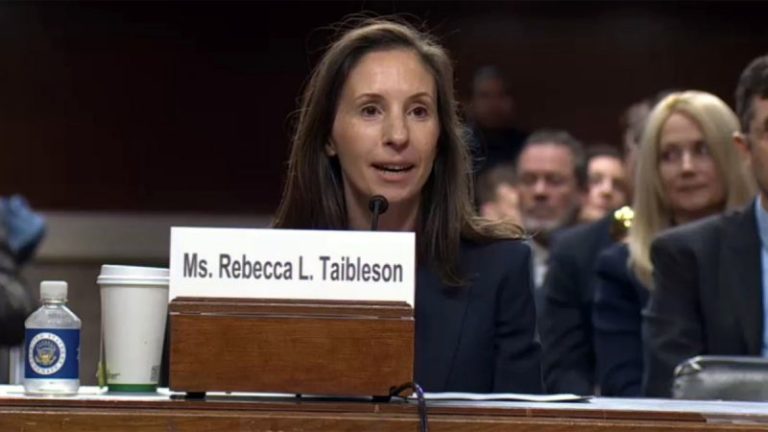
        Recently, Rebecca Taibleson appeared before the Senate Judiciary Committee for her confirmation hearing to a Wisconsin-based seat on the United States Court of Appeals for the Seventh Circuit, a key step toward further solidifying President Trump’s strong judicial legacy. In choosing Taibleson, Trump selected a standout from a highly qualified field. She’s not only a seasoned prosecutor and sharp legal thinker, but she’s a proven defender of the Constitution and conservative values.

        Taibleson spent over a decade as a federal prosecutor in the Eastern District of Wisconsin, putting violent criminals behind bars. She doesn’t just theorize about public safety–she delivers it. She handles complex appeals and knows how to write strong legal arguments, and she wins cases and protects communities. Every day in her career, she applies the law with clarity, discipline, and purpose.

        Most importantly, in her role as the co‑chief of the Appellate Division of that U.S. Attorney’s office for nearly a decade, not only did Taibleson imprison violent and dangerous criminals who were terrorizing the community, she ensured they stayed there. There are too many weak judges who free criminals when they should rot in prison for their crimes. Rebecca Taibleson is not one of them.

        Her credentials speak for themselves. She clerked for the late, great Justice Antonin Scalia and then-Judge Brett Kavanaugh. She embraced a constitutionalist philosophy early in her career and never wavered. At her Senate confirmation hearing, she made it crystal clear: judges must interpret the law as written, not how they wish it were written. Judges must not rewrite laws based on personal views or political trends. She follows the original public meaning of the law and honors the Constitution.

        Taibleson also knows how to stand her ground. During one of the most brutal nomination fights in recent memory, she stepped up and testified in support of her former boss Brett Kavanaugh, a nomination fight for which I helped lead the charge as Chairman Chuck Grassley’s chief counsel for nominations on the Senate Judiciary Committee. While the left smeared and attacked, Rebecca Taibleson didn’t flinch. She stood firm in defense of the rule of law and the truth. That moment proved her courage and character.

        She also served in President Trump’s solicitor general’s office — the top government appellate advocates. She fought and won legal battles at the Supreme Court. She defended Trump administration policies on immigration, religious liberty, and constitutional limits. She didn’t just serve under President Trump, she helped him win. Her record shows loyalty, competence, and backbone.

        Some groups have raised concerns—and even opposition before they had a chance to watch her testimony at her Senate confirmation hearing. Some are fair points; most are not. They wanted someone else. They’re circulating misleading claims and ignoring facts. They’re criticizing a nominee who far exceeds the standard for confirmation. President Trump and his team reviewed many good candidates. Like with any nominee, they balanced all the pros and cons. While no nominee is ever perfect, Rebecca Taibleson proved through her long record and unflinching public testimony that she is outstanding. She has a proven track record of being bold and fearless.

        Taibleson handled her confirmation hearing exactly the way a strong nominee should. She didn’t dodge questions or pander. She answered directly and confidently and laid out her commitment to textualism, originalism, and constitutionalism. She emphasized the separation of powers and reminded the Senate that judges don’t make policy. Elected officials do.

        On precedent, she spoke with clarity. She said Dobbs v. Jackson controls abortion law, and she will follow it. She refused to play politics with hot-button issues, but she left no doubt about her commitment to the Constitution.

        She also promised to bring civility and discipline to the bench. She won’t use opinions to take swipes at parties, public officials, or opposing views. She respects the role of the judiciary and knows the difference between law and politics. She pledged to uphold judicial restraint.

        Taibleson’s background shows real-world depth. Early in her career, she worked with Israel’s national emergency medical, disaster, ambulance, and blood bank service Magen David Adom during the Second Intifada. She helped defend civilians from terrorist attacks. That experience gave her a deeper understanding of law, national security, justice, and what is at stake for Western civilization. It also showed her values: courage, service, and loyalty to free societies under attack.

        Taibleson has answered the questions raised by her detractors from the left and the right. She addressed every issue and demonstrated exactly why she belongs on the Seventh Circuit. Her hearing and record proves her fitness. She showed strength, clarity, and deep legal knowledge. And she put to bed any concerns.

        President Trump built the best judicial legacy in a generation. He transformed the Supreme Court into the first constitutionalist Court in 90 years. He reshaped the federal judiciary with principled, constitutionalist judges. He made those choices carefully, and he made the same careful decision here. Rebecca Taibleson fits that mold. She brings real experience, proven loyalty, and a first-rate legal mind.

        The Senate must confirm this bold and fearless judicial nominee. She earned this seat by standing up when it counted. She served President Trump with distinction and fought for her country in the courts. She prosecuted criminals and protected communities. She embraces originalism and the rule of law.

        President Trump chose right. The Senate must finish the job.

        This post appeared first on FOX NEWS

        While directly holding cryptocurrencies like Bitcoin and Ethereum is a popular option, investors looking for alternatives are clamoring for financial products such as crypto exchange-traded funds (ETFs).

        Canada first launched Bitcoin and Ethereum ETFs in 2021. These Canadian Bitcoin and Ethereum ETFs allow investors to place returns in tax-sheltered accounts like tax-free savings accounts or registered retirement savings plans.

        “There is a high demand for a Bitcoin product that has all the features that people love about ETFs — that they trade on an exchange, that they’re liquid,” Ross Mayfield, investment strategy analyst at Robert W. Baird & Co., told Bloomberg in mid-2021.

        Interest has only increased since then. In the US, Bitcoin ETFs’ net assets surpassed US$100 billion in November 2024, gaining ground on US gold ETFs. Sean Farrell, head of digital asset strategy at Fundstrat, wrote in mid-2023 that the Bitcoin ETF category at large has the potential to surpass the precious metals ETF market in terms of asset value.

        ‘Bitcoin ETF eventually could become >$300 billion category,’ he said in the note.

        Ethereum ETFs have also become a major talking point. Ethereum is the most widely used blockchain technology, and Ether, the digital currency of this platform, is the second largest cryptocurrency after Bitcoin.

        In Q2 2025, Canadian ETF firms officially launched North America’s first Solana and XRP spot ETFs, offering investors exposure to the significant altcoins. The launch of XRP ETFs by Canadian firms comes amid increased clarity regarding XRP’s regulatory status in the US.

        With that in mind, it’s worth taking a look at the currently available Canadian cryptocurrency ETFs.

        The list below includes the biggest 15 crypto ETFs available on the Canadian market sorted by assets under management, and all data presented is current as of September 16, 2025.

        1. Fidelity Advantage Bitcoin ETF (TSX:FBTC)

        Assets under management: C$1.48 billion

        The Fidelity Advantage Bitcoin ETF launched in November 2021. It offers the security of Fidelity’s in-house cold storage services for its holdings.

        While it previously had a management fee of 0.39 percent, the Fidelity Advantage Bitcoin ETF lowered it in January 2025 to an ultra-low management fee of 0.32 percent.

        2. CI Galaxy Bitcoin ETF (TSX:BTCX.B)

        Assets under management: C$1.40 billion

        Launched in March 2021, the CI Galaxy Bitcoin ETF was born out of a partnership between cryptocurrency leaders Galaxy Fund Management and CI Global Asset Management. Galaxy Fund Management is part of Galaxy Digital, a diversified financial services firm with a focus on digital assets and the blockchain technology sector.

        The ETF’s objective is to give investors exposure to Bitcoin via an institutional-quality fund platform, as its holdings are wholly Bitcoin and are kept in cold storage. At 0.4 percent, this fund is another with one of the lowest management fees of the crypto funds on the market.

        3. Purpose Bitcoin ETF (TSX:BTCC)

        Assets under management: C$1.04 billion

        Billed as the world’s first physically settled Bitcoin ETF, the Purpose Bitcoin ETF launched in February 2021 and is backed by Bitcoin in cold storage. This means the fund allows investors to add and sell Bitcoin with no digital wallet required.

        Hosted by Canadian investment company Purpose Investments, the Purpose Bitcoin ETF has a management expense ratio of 1.5 percent.

        4. CI Galaxy Ethereum ETF (TSX:ETHX.U)

        Assets under management: C$805.65 million

        The CI Galaxy Ethereum ETF, another collaboration between CI and Galaxy, offers investors exposure to the spot Ethereum price through Ether holdings in cold storage. The fund launched on April 20, 2021, the same day as two of the other Ether ETFs on this list.

        The CI Galaxy Ethereum ETF has a low management fee of just 0.4 percent.

        5. 3iQ Solana Staking ETF (TSX:SOLQ)

        Assets under management: C$353.67 million

        The 3iQ Solana Staking ETF is designed to provide investors with a user-friendly and secure way to gain exposure to SOL and earn passive rewards through staking. Its launch quickly garnered significant assets under management and attracted investments from SkyBridge Capital and two of ARK Invest’s ETFs.

        For the first 12 months after its April 16, 2025, launch, the ETF features a 0 percent management fee. After this initial period, the management fee will be 0.15 percent.

        6. Evolve Bitcoin ETF (TSX:EBIT)

        Assets under management: C$261.36 million

        Evolve ETFs partnered with cryptocurrency experts, including Gemini Trust Company, CF Benchmarks, Cidel Bank & Trust and CIBC Mellon Global Services, to launch the Evolve Bitcoin ETF. The fund, which holds its own Bitcoin, has a management fee of 0.75 percent.

        Launched a week after the Purpose Bitcoin ETF, its holdings of Bitcoin are priced based on the CME CF Bitcoin Reference Rate, a once-a-day benchmark index price for Bitcoin denominated in US dollars.

        7. Purpose Ether ETF (TSX:ETHH)

        Assets under management: C$253.94 million

        The Purpose Ether ETF is a direct-custody Ether ETF that launched on April 20, 2021. This fund currently holds over 87,000 Ether, which it stores in cold storage.

        The Purpose Ether ETF offers investors exposure to the daily price movements of physically settled Ether tokens with a management fee of 1 percent.

        8. 3iQ XRP ETF (TSX:XRPQ)

        Assets under management: C$175.27 million

        The 3iQ XRP ETF provides investors with exposure to XRP, the digital asset native to the XRP Ledger. The ETF, which launched on June 17, 2025, is passively managed and aims to track the performance of the CME CF XRP-Dollar Reference Rate. The underlying XRP is held in secure cold storage.

        The fund’s primary objectives are to give unitholders an opportunity for long-term capital appreciation through exposure to XRP and its daily price movements against the US dollar. This XRP ETF has a 0 percent management fee for its first six months, after which time it will change to 0.59 percent.

        9. Purpose Bitcoin Yield ETF (TSX:BTCY)

        Assets under management: C$124.85 million

        The Purpose Bitcoin Yield ETF uses a covered call strategy to generate yield for investors, which involves writing call options on Bitcoin. Call options give the buyer an option to purchase an asset at a specific price on or before a specific date.

        Its structure allows the fund to earn income from option premiums while providing investors with exposure to Bitcoin’s price movements. Its distributions are paid monthly and has a management fee of 1.1 percent.

        10. Evolve Ether ETF (TSX:ETHR)

        Assets under management: C$107.32 million

        The Evolve Ether ETF offers investors an easier route to investing in Ether. The fund’s holdings of Ether are priced based on the CME CF Ether-Dollar Reference Rate, a once-a-day benchmark index price for Ether denominated in US dollars.

        As with the Evolve Bitcoin ETF, the Evolve Ether ETF has a management fee of 0.75 percent.

        11. Fidelity Advantage Ether ETF (TSX:FETH)

        Assets under management: C$101.38 million

        Following the successful launch of its Bitcoin fund, Fidelity brought its Advantage Ether ETF to market in September 2022, making this the newest Ether ETF in Canada. Its holdings are stored in Fidelity’s in-house cold storage.

        The Fidelity Advantage Ether ETF has a low management fee of 0.4 percent.

        12. Purpose Ether Yield ETF (TSX:ETHY)

        Assets under management: C$89 million

        Like the Purpose Bitcoin Yield ETF, the Purpose Ether Yield ETF offers investors an opportunity to invest in Ether while also generating yield. Purpose Investments lends a portion of its Ether holdings to institutional borrowers and earns interest on those loans.

        Investors who purchase shares of this ETF receive a portion of the interest earned in monthly distributions. Like Purpose’s Bitcoin Yield ETF, its management fee is 1.1 percent.

        13. Purpose XRP ETF (TSX:XRPP)

        Assets under management: C$82.27 million

        The Purpose XRP ETF started trading on the Toronto Stock Exchange on June 18, 2025, as part of the launch of Canada’s first XRP ETFs. The fund invests directly in XRP, offering investors access to the XRP spot price.

        The new asset is offering a 0 percent management fee through February 2026, after which time it will have a management fee of 0.69 percent.

        14. Evolve Cryptocurrencies ETF (TSX:ETC)

        Assets under management: C$78.95 million

        The Evolve Cryptocurrencies ETF launched in September 2021 as the first multi-cryptocurrency ETF, providing combined exposure to both Bitcoin and Ether. Its holdings have since expanded to include XRP and Solana.

        This product from Evolve ETFs allows investors to diversify their crypto portfolios and provides indirect exposure to the four coins, weighing them by market capitalization and rebalancing its holdings on a monthly basis. Bitcoin makes up the majority of its portfolio.

        While this ETF has no management fee, the underlying funds that hold both Bitcoin and Ether have management fees of 0.75 percent plus applicable taxes.

        15. Purpose Solana ETF (TSX:SOLL)

        Assets under management: C$53.96 million

        The Purpose Solana ETF gives investors exposure to the price of the Solana cryptocurrency. Its purpose is to provide a regulated and convenient way for investors to participate in the Solana market without the complexities of directly buying and storing the digital asset.

        A key feature of this specific ETF is that it was one of the world’s first with staking built right in. It has a low management fee of 0.39 percent.

        Securities Disclosure: I, Meagen Seatter, hold no direct investment interest in any company mentioned in this article.

        This post appeared first on investingnews.com

        (TheNewswire)

        Brossard (Québec), le 18 septembre 2025 – TheNewswire CORPORATION CHARBONE HYDROGÈNE (TSXV: CH,OTC:CHHYF , OTCQB: CHHYF, FSE: K47 ) (« Charbone » ou la « Société »), une compagnie spécialisée dans la production et la distribution d’hydrogène vert, est heureuse d’annoncer la signature de débentures convertibles de remplacement d’un montant de 2 050 000 $ (l’ « Débentures de remplacement » ) en modifiant certaines modalités des débentures convertibles garanties de la Société (chacune, une « Débenture ») que la Société avait émises dans le cadre du placement privé de débentures d’un montant en principal total de 1 746 366 $ de débentures convertibles garanties à 12 %.

        Avant l’entrée en vigueur des débentures de remplacement le 30 septembre 2025, les débentures étaient convertibles en actions ordinaires de Charbone (chacune, une « Action de Débenture »), à un prix de conversion par action de 0.10$, jusqu’à l’échéance.

        En vertu des nouvelles Débentures de remplacement :

        • La date d’échéance a été prolongée des 30 septembre et 31 octobre 2025 au 30 septembre 2026 ;

        • Le solde convertible, passe de 1,7 millions de dollars à 2,1 millions de dollars au même taux annuel de 12 %, payable mensuellement ; et

        • Le prix de conversion des débentures passe de 0,10$ par action à 0,07$ par action

        Les nouvelles Débentures de remplacement seront assujetties à l’approbation de la Bourse de croissance TSX.

        Ces changements annoncés aujourd’hui aux débentures existantes offrent une nouvelle flexibilité de financement à Charbone en prolongeant considérablement les échéances et nous fournissent un financement supplémentaire pour compléter et exécuter l’acquisition de l’équipement opérationnel de production et de ravitaillement en hydrogène, annoncée le 5 septembre 2025 , a déclaré Benoit Veilleux, Chef de la direction financière et secrétaire corporatif de Charbone. À mesure que nous gagnons en élan, nous travaillons continuellement à optimiser notre structure de capital et à faire progresser nos avantages de pionnier ainsi que les intérêts de nos actionnaires .

        À propos de Charbone Hydrogène Corporation

        Charbone est une entreprise intégrée spécialisée dans l’hydrogène ultrapur (UHP) et la distribution stratégique de gaz industriels en Amérique du Nord et en Asie-Pacifique. Elle développe un réseau modulaire de production d’hydrogène vert tout en s’associant à des partenaires de l’industrie pour offrir de l’hélium et d’autres gaz spécialisés sans avoir à construire de nouvelles usines coûteuses. Cette stratégie disciplinée diversifie les revenus, réduit les risques et augmente sa flexibilité. Le groupe Charbone est coté en bourse en Amérique du Nord et en Europe sur la bourse de croissance TSX (TSXV: CH,OTC:CHHYF); sur les marchés OTC (OTCQB: CHHYF); et à la Bourse de Francfort (FSE: K47). Pour plus d’informations, visiter www.charbone.com .

        Énoncés prospectifs

        Le présent communiqué de presse contient des énoncés qui constituent de « l’information prospective » au sens des lois canadiennes sur les valeurs mobilières (« déclarations prospectives »). Ces déclarations prospectives sont souvent identifiées par des mots tels que « a l’intention », « anticipe », « s’attend à », « croit », « planifie », « probable », ou des mots similaires. Les déclarations prospectives reflètent les attentes, estimations ou projections respectives de la direction de Charbone concernant les résultats ou événements futurs, sur la base des opinions, hypothèses et estimations considérées comme raisonnables par la direction à la date à laquelle les déclarations sont faites. Bien que Charbone estime que les attentes exprimées dans les déclarations prospectives sont raisonnables, les déclarations prospectives comportent des risques et des incertitudes, et il ne faut pas se fier indûment aux déclarations prospectives, car des facteurs inconnus ou imprévisibles pourraient faire en sorte que les résultats réels soient sensiblement différents de ceux exprimés dans les déclarations prospectives. Des risques et des incertitudes liés aux activités de Charbone peuvent avoir une incidence sur les déclarations prospectives. Ces risques, incertitudes et hypothèses comprennent, sans s’y limiter, ceux décrits à la rubrique « Facteurs de risque » dans la déclaration de changement à l’inscription de la Société datée du 31 mars 2022, qui peut être consultée sur SEDAR à l’adresse www.sedar.com; ils pourraient faire en sorte que les événements ou les résultats réels diffèrent sensiblement de ceux prévus dans les déclarations prospectives.

        Sauf si les lois sur les valeurs mobilières applicables l’exigent, Charbone ne s’engage pas à mettre à jour ni à réviser les déclarations prospectives.

        Ni la Bourse de croissance TSX ni son fournisseur de services de réglementation (tel que ce terme est défini dans les politiques de la Bourse de croissance TSX) n’acceptent de responsabilité quant à la pertinence ou à l’exactitude du présent communiqué.

        Pour contacter Corporation Charbone Hydrogène :

        Téléphone bureau: +1 450 678 7171

        Courriel: ir@charbone.com

        Benoit Veilleux

        Chef de la direction financière et secrétaire corporatif

        Copyright (c) 2025 TheNewswire – All rights reserved.

        News Provided by TheNewsWire via QuoteMedia

        This post appeared first on investingnews.com